
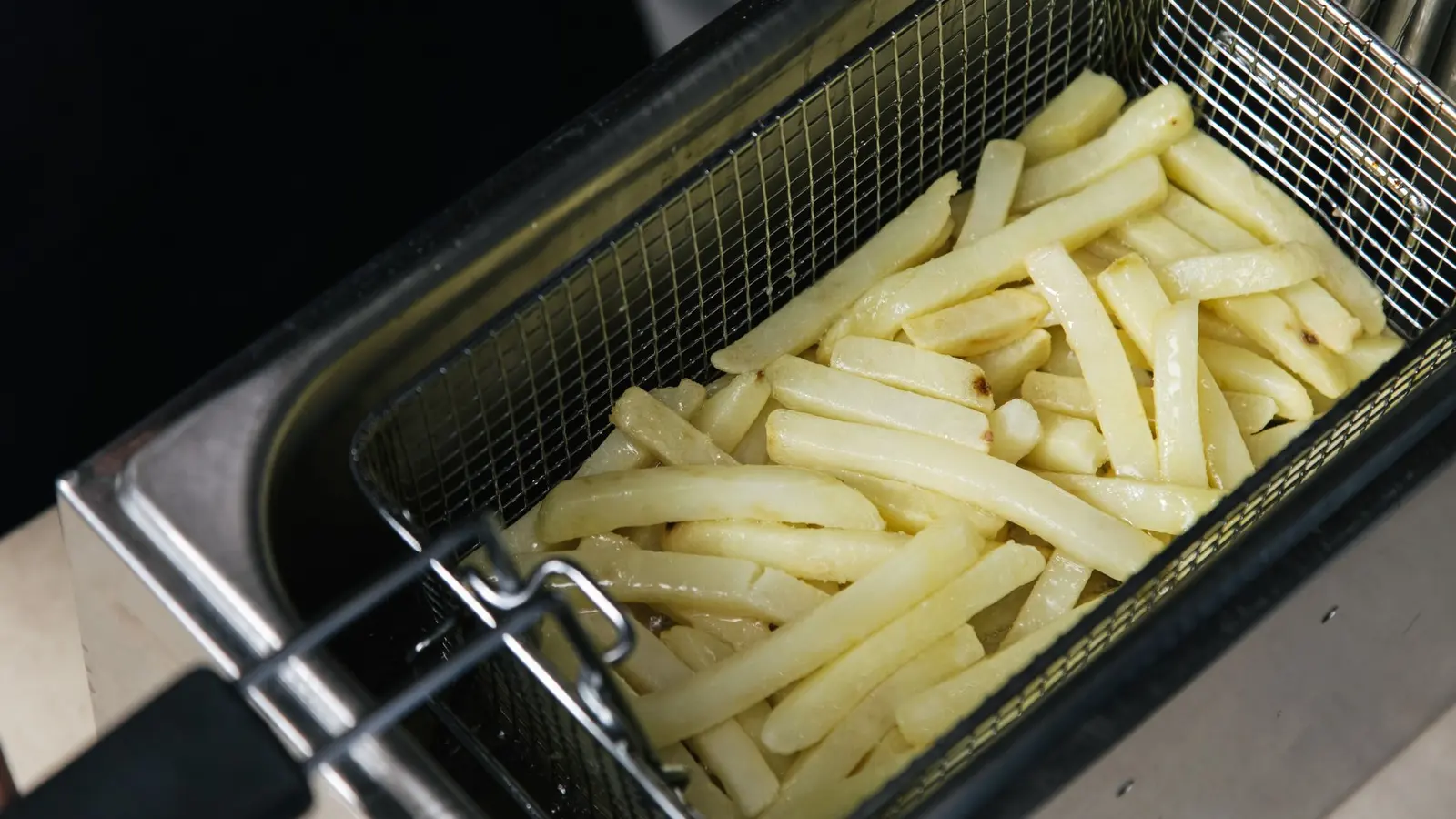
Price per jug is the wrong number
The number that matters is cost per month, not cost per case. A high-oleic oil can run noticeably more per jug and still come out cheaper because you change it less often. If you are frying hard — wings, breaded product, heavy lunch and dinner peaks — the longer-life oil usually wins outright. If your fryer is quiet most of the day, the cheaper oil is genuinely the better buy.
We will work it out with your actual numbers: how many fryers, what you drop, and how often you are dumping. That conversation usually changes what someone buys.
What is actually killing your oil
- Idle heat. A fryer sitting at full temperature with nothing in it degrades oil faster than one that is working. Drop the idle setting between rushes.
- Crumbs and breading. Every particle left in the vat is carbon tomorrow. Skim during service, filter daily.
- Water. Ice-heavy product dumps water into hot oil, which accelerates breakdown and is a burn risk.
- Salt over the vat. Season in the basket or on the plate, never above the oil.
Our full routine is on the fryer oil management guide, and the filter paper, powder and boil-out are on the supplies page so they land with the same delivery.

Tell us what you go through.
Send your order guide, or just a photo of last week's invoice. We price it line by line, tell you where we are stronger and where we are not, and bring samples before you commit to anything.
Common questions
How often should I change fryer oil?
There is no universal interval — it depends on what you fry and how well you filter. Watch for foaming that does not settle, a rancid smell, smoking at working temperature, and fries darkening before they crisp. Test strips are cheap and take the guesswork out.
Is high-oleic oil worth the extra cost?
In a high-volume fry house, usually yes — it lasts long enough that cost per month drops even though cost per jug rises. In a low-volume kitchen it often is not. We will run your numbers before recommending it.
Do you deliver oil with the rest of my order?
Yes. Oil rides on the same truck as your frozen, refrigerated and dry goods — one delivery, one invoice.