Most operators inherit their fry cut from whoever set up the kitchen. It's worth revisiting: the cut decides how crisp the fry is, how long it holds, how much of the plate it covers and what each basket costs. Below is how we walk customers through it.
The cuts, compared
| Cut | Crispness | Hold time | Plate coverage | Best for |
|---|---|---|---|---|
| Shoestring (~1/8") | Very high | Short | High per lb | Loaded fries, fast turns |
| Straight 1/4" | High | Short–medium | Good | Fast food, burger stands |
| Straight 5/16" | Balanced | Medium | Good | The all-rounder |
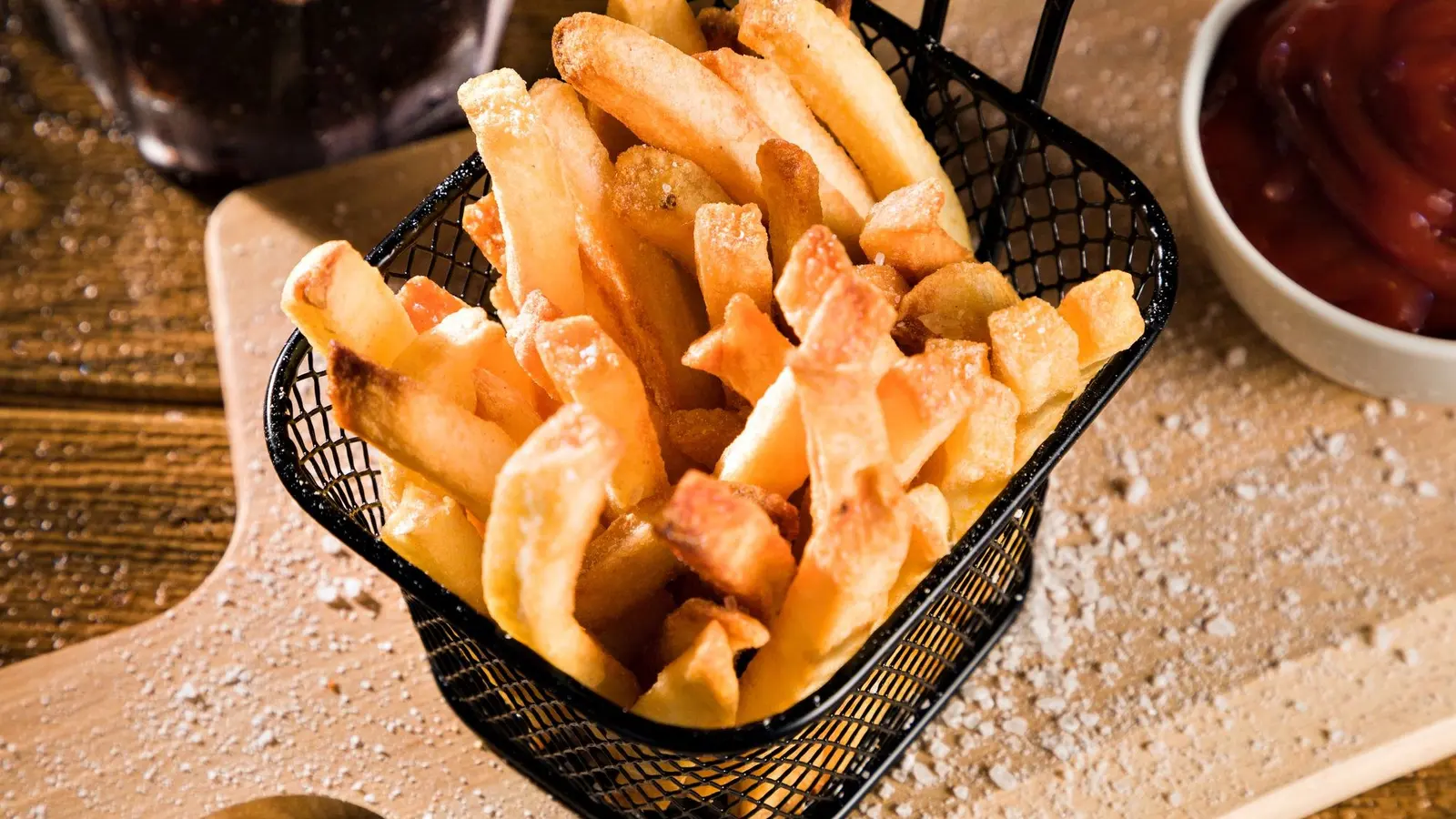
| Straight 3/8" | Medium | Medium–long | Good | Baskets, plates |
| Crinkle | High | Medium | Good | Diners, drive-ins |
| Steak / wedge | Lower | Long | Very high | Plates, sharing baskets |
| Coated (clear-coat / battered) | Very high | Long | Good | Delivery, catering |
Three questions that settle it
1. How long does a fry wait before it's eaten?
If most fries leave the kitchen within two minutes, a thin straight cut gives the best crunch. If they sit under a lamp, ride in a delivery bag or go out on a catering line, move to a thicker cut or a coated fry — the coating holds crispness three to four times longer.
2. What does the plate need to look like?
Thicker cuts and wedges cover a plate with less weight. Thin cuts look generous in a basket or cone but need more ounces to fill a plate. Coverage per pound is a real food-cost lever.
3. What's the fryer doing the rest of the time?
Thin cuts recover fast and clear the fryer quickly. Thick cuts and battered products take longer and absorb more oil. If your fryer is the bottleneck at peak, the cut matters as much as the fryer's BTUs.