
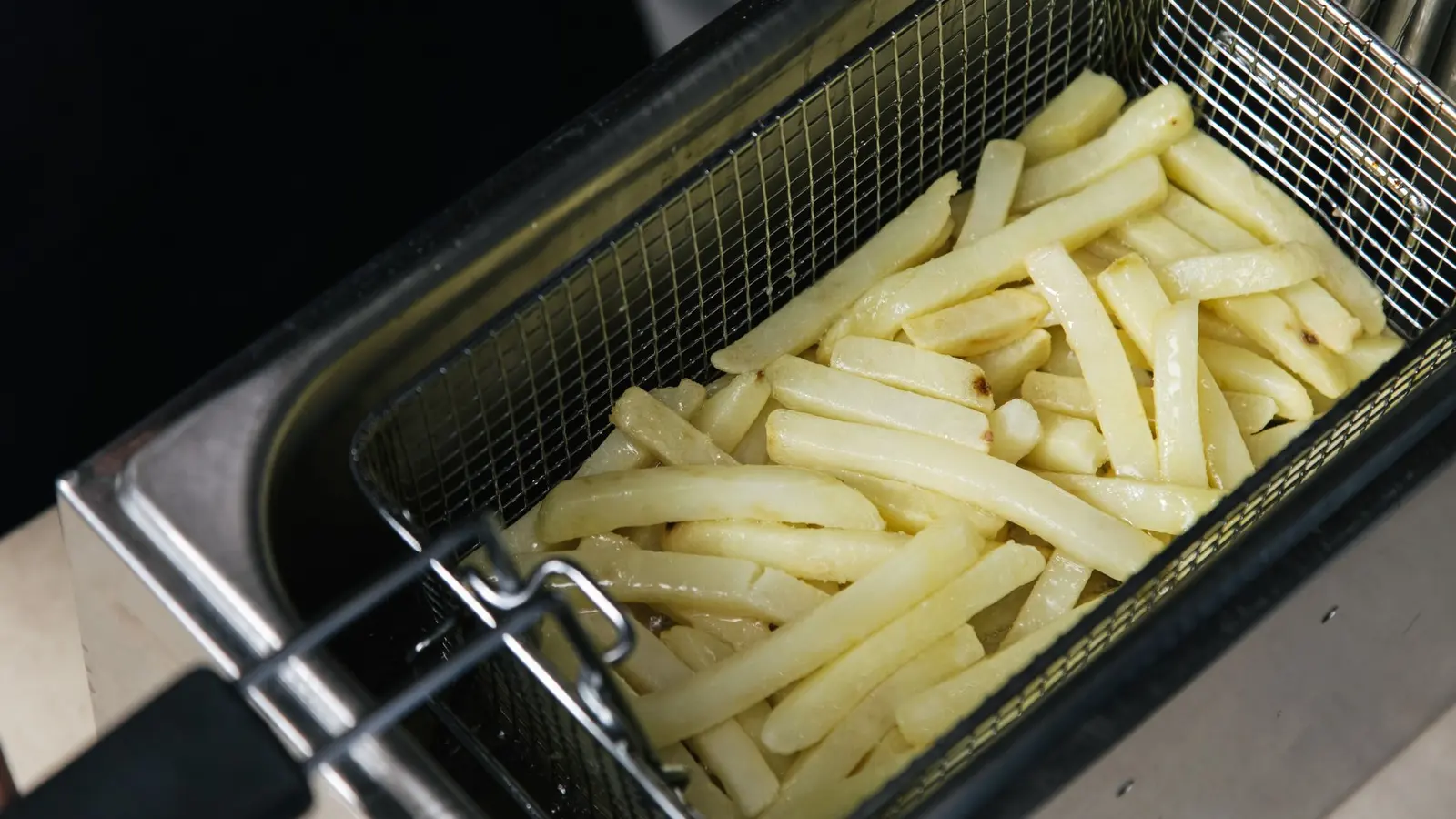
Oil is the most expensive ingredient most kitchens never put on a recipe card. It also decides how your fries taste on day four of a fryer load. A short routine makes the difference.
What kills oil
- Heat with nothing in the fryer. Idle fryers at full temperature break oil down fastest. Drop to a lower idle setting between rushes.
- Crumbs and breading. Every particle left in the vat is carbon by the next day. Skim during service and filter daily.
- Water and ice. Ice-crystal-heavy product from a thawed-and-refrozen case dumps water into the oil. Keep frozen product frozen.
- Salt in the vat. Season in the basket or on the plate, never over the fryer.
A routine that works
Skim floating particles every hour. Keep the vat topped up — a fuller vat holds temperature better and stresses oil less.
Filter at close, every day, with the fryer at working temperature. Wipe down the vat and check the heating elements for carbon.
Boil out the fryer. Track oil changes per fryer on a log — it's the only way to see whether the routine is working.
Choosing the oil
High-oleic canola and soy blends cost a little more per JIB and last noticeably longer in high-volume fryers; they also produce a cleaner-tasting fry. For lower-volume kitchens, standard canola or a shortening blend is often the better value. We stock both — ask for a quote on your actual monthly usage, not a per-case price.
Know when to change
Dark color alone isn't the signal. Watch for foaming that doesn't settle, a rancid or "fishy" smell, smoking at working temperature, and fries that come out dark before they're crisp. Test strips are cheap and take the guesswork out of it.